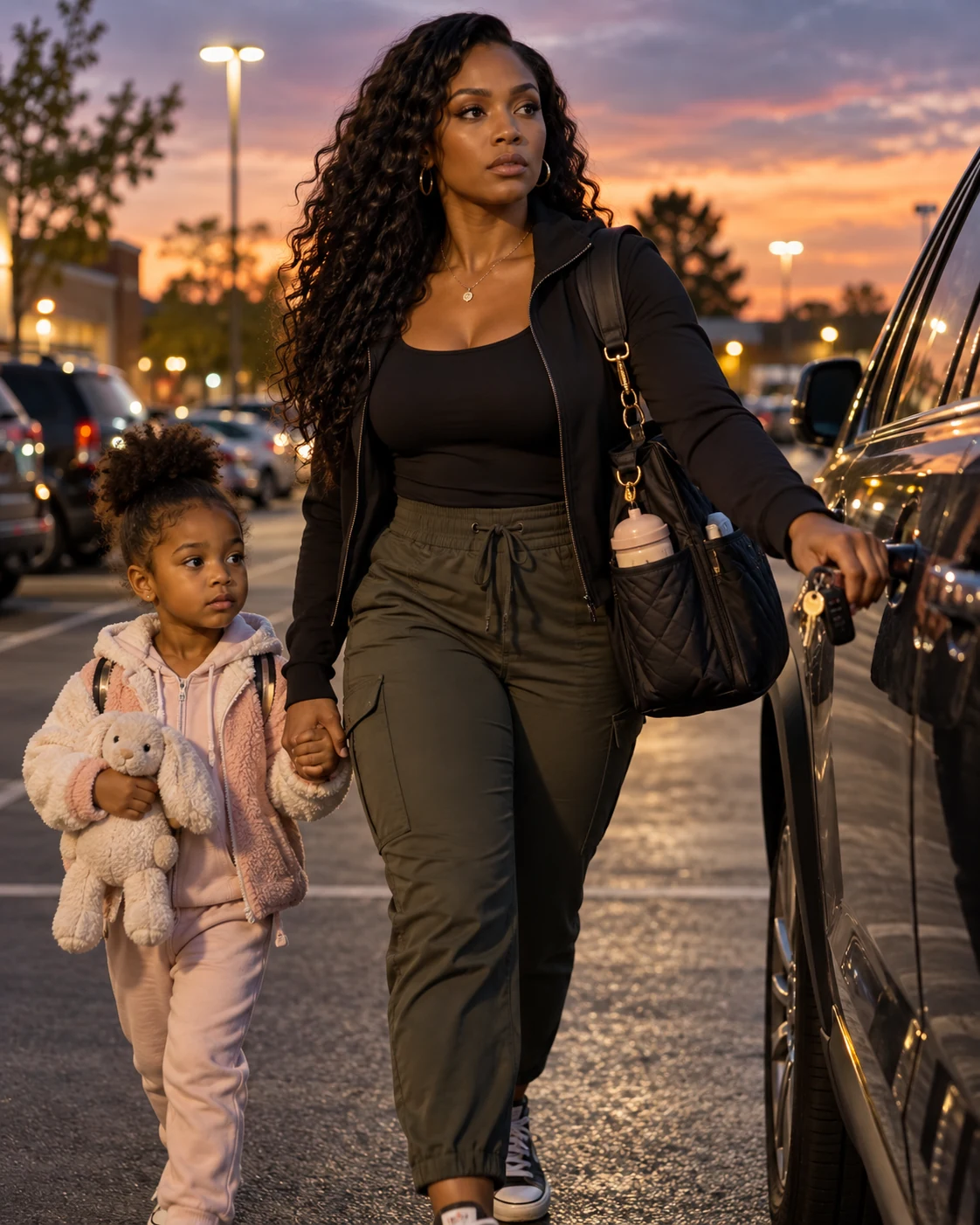
It should be an ordinary walk to your car.
One child wants to be carried. Another is asking for something from your bag. You are keeping track of your keys, your surroundings, and the person standing a little too close.
You want to get everyone home. You would also like getting everyone home to require a little less worry.
For another woman, the concern starts long before she reaches a parking lot. It is the message from an ex who will not leave her alone. The tension before a custody exchange. The person who knows her schedule, her address, and exactly which threats will make her afraid to ask for help.
And sometimes, the decision to learn begins quietly. Nothing happened last night. You simply want to understand your options before you need them.
At Virginia Tactical Shooting Academy and Commonwealth Training & Preparedness Group, these concerns belong in the conversation.
Women make up more than 70% of our classes. Through teaching, we have also learned. You have helped us understand that a conversation about self-defense may also be a conversation about motherhood, independence, past experiences, legal consequences, or the exhaustion of always trying to think ahead.
We will not pretend that knowing how to operate a firearm answers every one of those concerns.
We will take the time to listen, explain, and help you find an appropriate place to begin.
You Can Want Protection Without Wanting a Whole New Identity
Learning about firearms does not require you to become someone else.
You do not have to become a gun enthusiast, adopt someone else’s opinions, or arrive with a collection of equipment. You can be interested in personal safety while still feeling uncertain about owning or carrying a firearm.
Both feelings deserve room.
Perhaps there is already a firearm in your home, but someone else has always handled it. Perhaps you purchased one and realized that ownership did not bring the understanding you expected. Or you may be deciding that firearms are not right for your household and still want reliable safety education.
Our role is to help you understand—not make that decision for you.
For students beginning Foundations & Comfort, previous experience is not required, and you do not need to purchase a firearm first. Firearms are available for use during that classroom instruction. You can begin learning before making a purchasing decision.
You are allowed to start with curiosity. You are allowed to start with uncertainty.
When the Person You Fear Already Knows Your Name
A conversation about women’s safety cannot stop at strangers in parking lots.
Domestic violence can make even ordinary decisions complicated. Reaching out, leaving, arranging transportation, or discussing the children may carry consequences that an outsider does not see. A personalized safety plan can account for your circumstances, your children, and the support available to you. It should not depend on someone simply telling you to leave. The Hotline
Knowing what you can do and how is important and surrounding yourself around people that care about your well-being.
Things are not hopeless and there are plenty of options available at your fingertips even though you may not know exactly what step to take next.
What Happened to You Was Not Your Fault
Sexual assault can leave a person examining every moment afterward: what she said, what she did not say, why she could not move, whether a different response would have changed anything.
Freezing or trying to appease someone during an assault can be an involuntary survival response. It is not a personal failure, and it does not make you responsible for another person’s violence.
Learning now can be something you choose for yourself. It should never become a way to blame yourself for what happened before.
In our classroom, you do not need to disclose an assault to explain why a subject feels difficult. You may tell us about a learning need or concern without telling us your story. If you want, before enrolling, you can speak with us about the class format, demonstrations, and anything that could affect your participation.
Firearm instruction is not trauma treatment, and no responsible instructor can promise that training will prevent every assault or control every response under stress.
After an assault, medical care, advocacy, and emotional support remain important options. RAINN can help connect survivors with appropriate services and information about medical examinations and reporting.
We want education to add to your support—not take the place of it.
Being Out Alone With Your Children Changes What Preparation Looks Like
Advice can sound simple until it has to work with a stroller, a sleeping toddler, groceries, and a child who needs extra help.
A useful plan has to fit your actual life.
Think about the ordinary details before a stressful moment: where you could find a staffed place to ask for help, whom you could contact, and what your children are old enough to understand. Personalized safety planning can include trusted people, safer destinations, emergency contacts, and a simple signal that means it is time to get help.
For children, the message should be reassuring and age-appropriate. They can learn whom to contact and where to go during an emergency. They should not be given the responsibility of physically intervening or protecting a parent from violence.
You also do not owe someone continued conversation simply because you are worried about seeming impolite. Moving toward help, ending an interaction, or asking an employee to assist you are reasonable options to consider when something feels wrong. They are options—not guarantees, and never a basis for blaming someone who is harmed.
The purpose of preparation is not to make your children afraid of the world. It is to give your family something more useful than panic to work from.
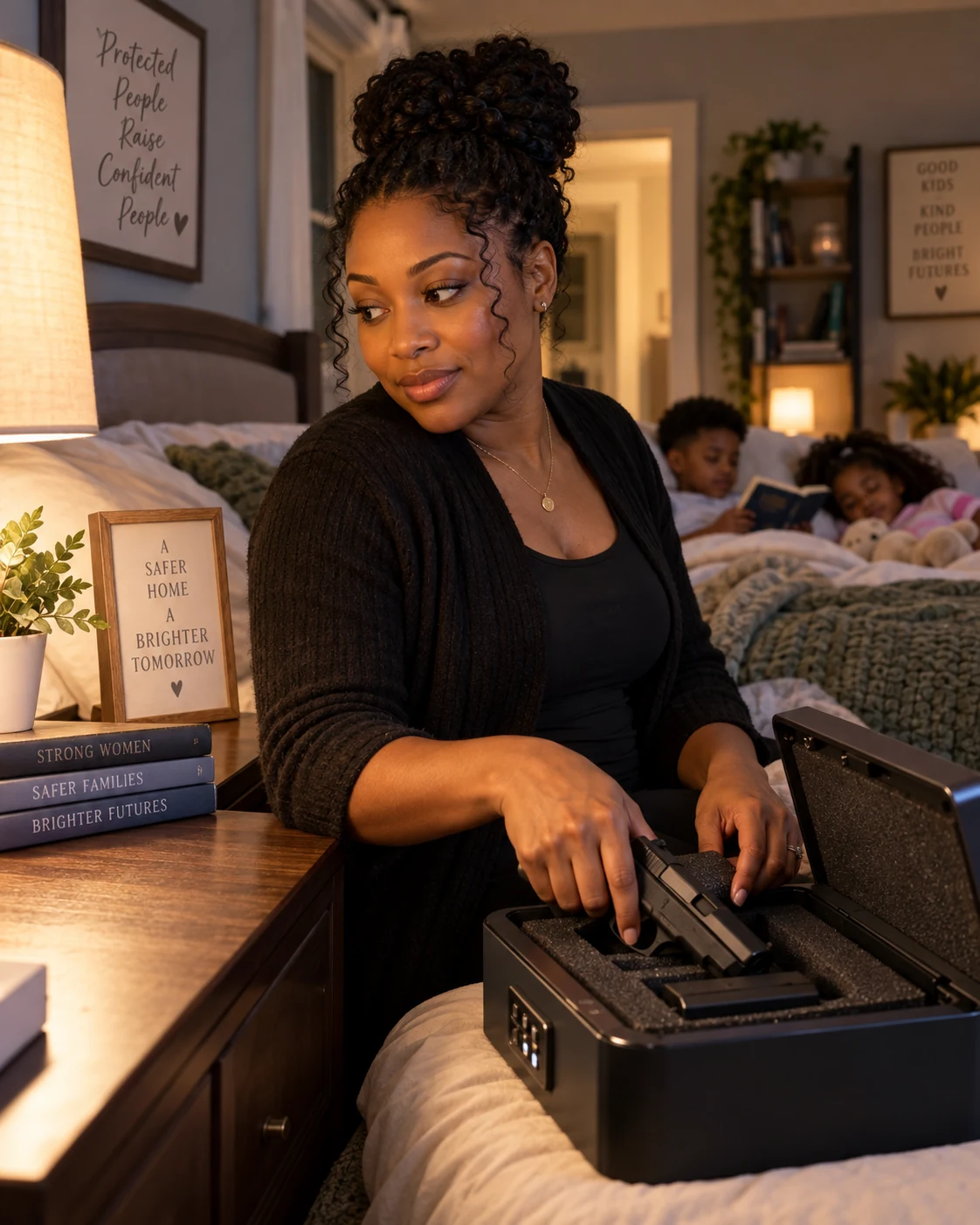
The Fear of Losing Your Children Deserves a Real Answer
For a mother, the fear may not end with surviving an attack.
It can reach into what happens afterward: you had to use your firearm to protect yourself or your family, your children were nearby, and now you are afraid that someone will accuse you of endangering the very people you were trying to protect.
You are thinking about getting everyone through the emergency—and being able to stay together afterward.
That concern deserves more than a casual “You’ll be fine.”
Virginia’s emergency-removal law does not create an automatic rule that children must be taken away simply because their mother used a firearm while they were nearby. Emergency removal generally requires evidence of an imminent threat of severe or irreparable harm to the child and consideration of whether less drastic alternatives could provide protection. Virginia Code § 16.1-251
That is not a promise that an incident will go unquestioned. Virginia also prohibits reckless firearm handling that endangers another person. Virginia Code § 18.2-56.1 Whether force was legally justified and whether someone recklessly endangered a child or another bystander can require careful legal analysis.
This is why responsible preparation must include more than learning how a firearm operates. Safe handling, understanding the limits of your training, and obtaining sound legal guidance belong in the same conversation. When an incident has occurred—or an existing custody case or court order complicates your situation—speak with a Virginia attorney rather than relying on an instructor’s prediction.
We take your concern seriously, help you build a foundation of safer habits, and recognize when your question needs an attorney’s answer.
You deserve to prepare for the emergency and its aftermath—not be left alone with that fear.
Confidence Includes Understanding the Law
Wanting to protect yourself is deeply understandable. Knowing the legal limits of force is part of responsible preparation.
Virginia’s self-defense law examines necessity, the perceived threat, the reasonableness of the response, and the person’s role in bringing about the confrontation. Deadly-force self-defense generally involves a reasonable fear of imminent death or great bodily harm—not simply anger, an insult, or a possible future threat. Force must not exceed what is reasonably necessary. Virginia Model Jury Instructions, 33.800–33.810
The distinction is important: being uncomfortable can be a reason to leave or seek help; it is not automatically legal justification to use a firearm.
Our Virginia Concealed Carry Class addresses firearm safety, Virginia firearm laws, prohibited locations, interactions with law enforcement, transportation, storage, and legal considerations surrounding personal protection. Those subjects belong together. Understanding how to carry without understanding the responsibilities would leave an important gap.
We want you to leave with better judgment and clearer understanding—not false certainty.
You Should Not Have to Brace Yourself for the Classroom
Arriving for a first class can take courage of its own.
You may be concerned about noise, unfamiliar equipment, physical limitations, or needing an explanation more than once. You may have been spoken over before. Someone may have made a decision for you instead of showing you enough to make it yourself.
That is not the learning experience we want for you.
We are here to have patience, answer your questions, and give you a comfortable place to build understanding. You should know what a class involves before you arrive. You should be able to say that a term is unfamiliar or that you need something explained differently.
Our Foundations & Comfort course is specifically designed around safe habits and understanding—not speed. Its published approach encourages questions and learning at a comfortable pace.
Comfort does not mean ignoring safety rules. It means explaining them clearly and treating you with dignity while you learn.
Speak with us before booking about physical limitations, sensory concerns, or the learning environment you prefer. We can discuss the course format and whether suitable arrangements are available. Private-training requests are also available; dates and arrangements need confirmation.
And we will not assume that being a woman makes you a beginner. Experienced students deserve instruction that respects their existing knowledge, too.
Choose a Starting Point That Fits You
For a structured path toward greater comfort and confidence with a handgun, we recommend The Journey Academy.
You should not have to piece together your education from scattered advice or feel rushed from uncertainty straight onto a shooting range. Journey Academy connects three classes into a progressive program, giving you a foundation to build on before moving to the next stage.
You begin with Foundations & Comfort, learning firearm safety, handgun operation, and proper handling. Maintenance & Muscle Memory strengthens that foundation through proper care and repeated safe handling. Then Pistol 1 Live Fire brings those lessons to the range through supervised, instructor-led practice. Each class builds on the one before it.
The purpose is not to tell you to “just be confident.” It is to give that confidence something to stand on.
A clearer understanding of what you are handling. Familiarity developed through practice. The opportunity to ask for another explanation, receive guidance, and recognize what you still need to learn.
For the woman who has been relying on someone else to handle everything, our goal is greater understanding of her own. For the woman who owns a handgun but still feels uneasy around it, the goal is familiarity built carefully—not pressure to pretend she is comfortable. For the mother thinking about her household’s safety, the goal is a stronger foundation of responsible habits.
Journey Academy addresses the firearm-safety and handling part of those concerns. It is not specialized domestic-violence intervention, a guarantee of performance during an attack, or a substitute for legal advice about protecting your children. Those needs deserve their own qualified support.
You do not need previous firearms experience to begin, and you do not have to purchase a handgun first. Firearms are available for the classroom portions of the program.
**Explore The Journey Academy**
A Smaller First Step Is Welcome, Too
To dip a toe in first, start with Foundations & Comfort.
Take one class. Meet us. Ask the questions you have been carrying around. Give yourself a chance to experience the learning environment before deciding what comes next.
Foundations & Comfort can be taken individually, without committing to the full Journey Academy program. It is beginner-friendly, takes place in a controlled classroom environment, and emphasizes safe habits and understanding—not speed.
You do not have to commit to the whole journey to take a worthwhile first step.
**Start With Foundations & Comfort**
Our Virginia Concealed Carry Class is a beginner-friendly, in-person classroom course for learning firearm safety, responsible ownership, concealed-carry considerations, and Virginia law. No previous firearms experience is required. It is a starting point for education—not a substitute for supervised range instruction or individual legal advice.
**Explore Our Virginia Concealed Carry Class**
Review the current dates, prices, locations, and preparation instructions before registering. Talk with our team about any uncertainty so you can choose appropriately. Where a court order or other restriction applies, have your attorney confirm what participation is permitted.
You Do Not Have to Arrive Confident
You can arrive with questions. You can arrive after years of thinking about taking a class. You can arrive ready to learn something that someone else has always handled for you.
What matters is that the instruction respects where you are starting.
At Virginia Tactical Shooting Academy and Commonwealth Training & Preparedness Group, teaching so many women has reinforced something important: listening is part of instruction. The explanation we give should connect to the concern you actually brought through the door.
We want to help you understand your options, develop safe habits, strengthen your judgment, and build confidence grounded in learning.
Not because you should have been doing more all along.
Because you deserve the opportunity now.
When you are ready for training, join us. You do not have to figure everything out before your first class—that is where the learning begins.
For class questions, call 804-234-3346.
Support Is Available Whether or Not You Take a Class
For immediate danger, call 911 when it is safe to do so. VA Action Alliance
The Virginia Statewide Sexual and Domestic Violence Hotline offers free, confidential support around the clock. Call 800-838-8238 or text 804-793-9999. You do not need to be in an immediate crisis to speak with an advocate. VA Action Alliance
The National Domestic Violence Hotline is available at 800-799-7233, or text START to 88788. The Hotline
For sexual-assault support, contact RAINN at 800-656-4673. Support is available 24 hours a day. RAINN
This article provides general education, not individual legal advice, crisis counseling, or medical care. Training does not guarantee personal safety, prevent every assault, or determine criminal or custody outcomes. Consult an appropriate professional about your circumstances. Legal and resource information reviewed October 15, 2026.
Comment on this post and share your thoughts. This community thread is open to everyone—beginning their journey, experienced students, and those here to listen and support. Your voice belongs here.
Sources & helpful resources
- Virginia Code § 16.1-251 — Emergency removal orders
- Virginia Code § 18.2-56.1 — Reckless handling of firearms
- Virginia Model Jury Instructions — Criminal, 33.800–33.810
- Virginia Sexual & Domestic Violence Action Alliance — Support
- National Domestic Violence Hotline — Safety planning
- RAINN — Help and healing after an assault
General education from our training team. Individual legal questions belong with a Virginia attorney.
Let’s talk about it.
Comment on this post and share your thoughts. Beginning your journey, already experienced, or here to listen—there is room for you in this conversation.
Before you join the conversation
Keep it respectful. Share only what you feel comfortable making public. Leave out children’s names, addresses, case details, and other private information. Comments use your first name and last initial, and are visible to everyone. Your account email stays private. The Commonwealth team can remove spam, harassment, and unsafe content. For a private class question, contact our team.
Loading the conversation…
0 comments
Oldest first · Replies stay together